Pad printing vs screen and UV printing
Not every promotional item takes branding the same way. This guide compares pad printing, screen printing and UV printing so you can match the print method to the item, logo and finish you need.
Start with the item before the logo
The print method usually follows the shape and surface of the product. A flat notebook cover and a curved golf ball do not accept ink in the same way, so the best result comes from choosing the process that suits the item first, then checking how the logo will behave on that surface.
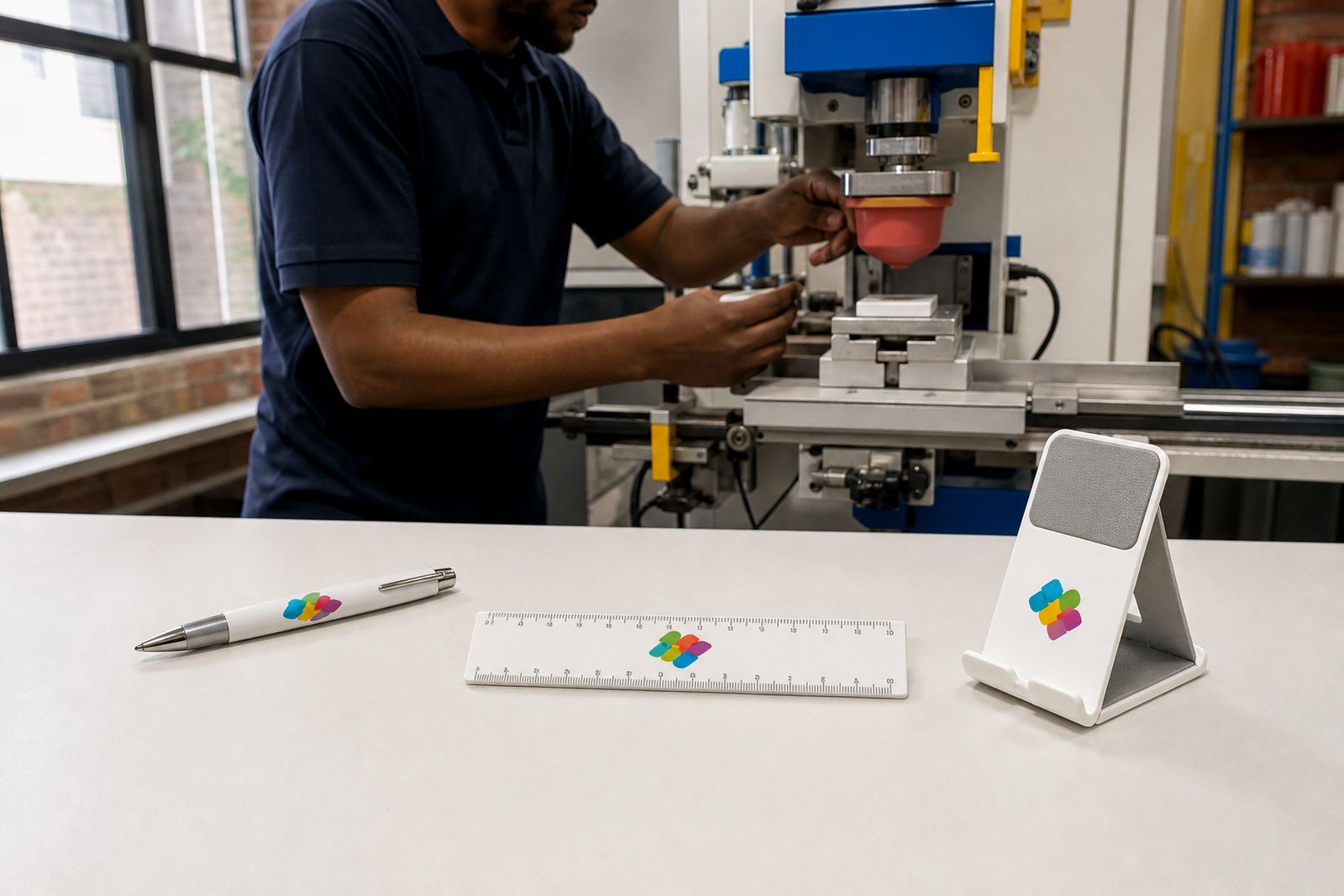
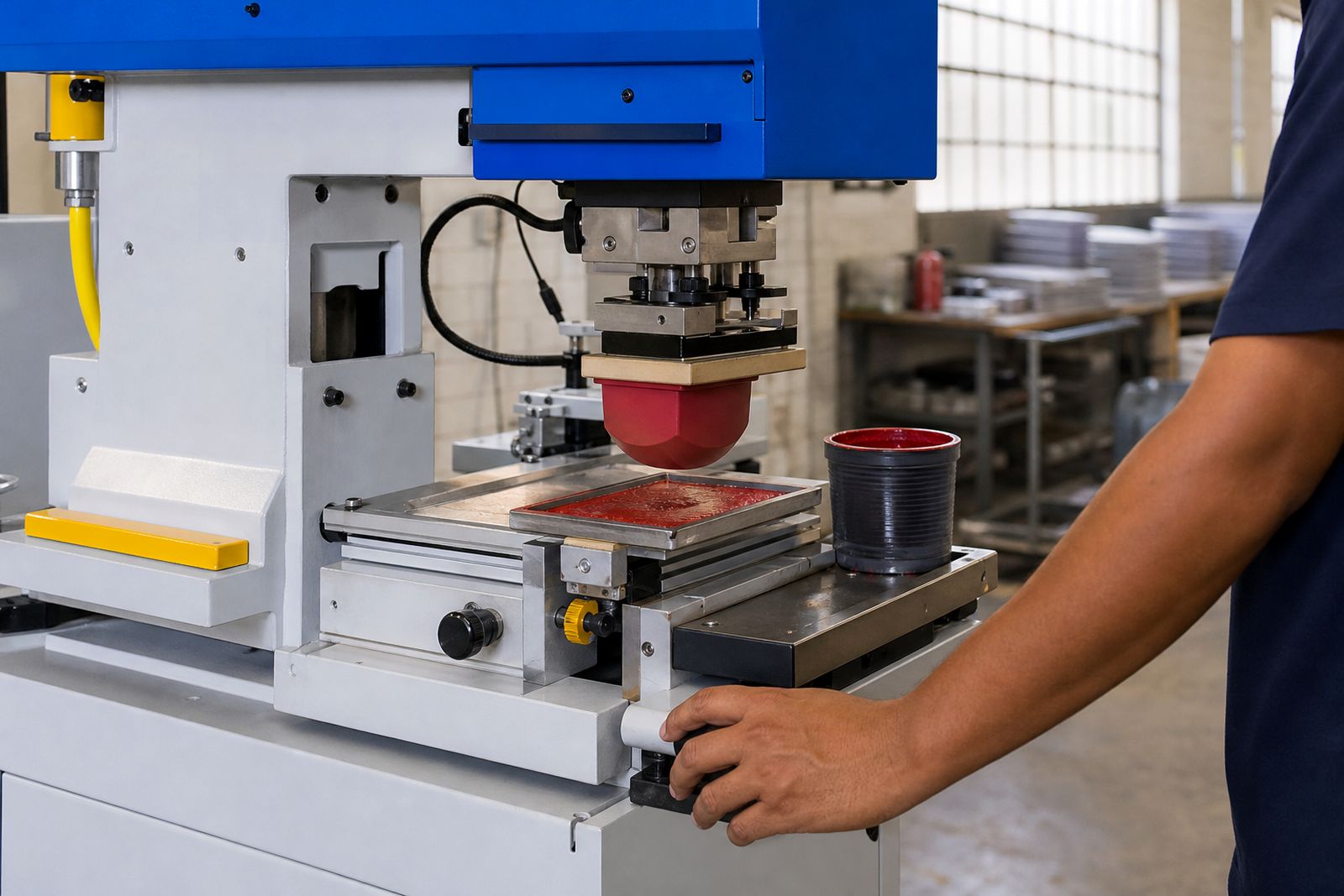
Pad printing is often the best fit for small, uneven or curved products. The silicone pad can lift ink from the plate and transfer it onto areas that are difficult for other methods. Screen printing suits flatter items with a larger open print area. UV printing works well where a direct digital print is needed on a flat or mostly flat panel, especially when there is full colour artwork or fine tonal detail.
- Pad printing: curved, recessed and small irregular areas.
- Screen printing: flatter surfaces with broader print zones.
- UV printing: flat panels, sharp detail and photo style artwork.
If the item has a taper, seam, clip, handle or textured patch, that matters more than many people expect. On promotional products the print area is often smaller than the product itself, so the usable zone needs to be checked carefully before artwork is approved.
Where pad printing makes the most sense
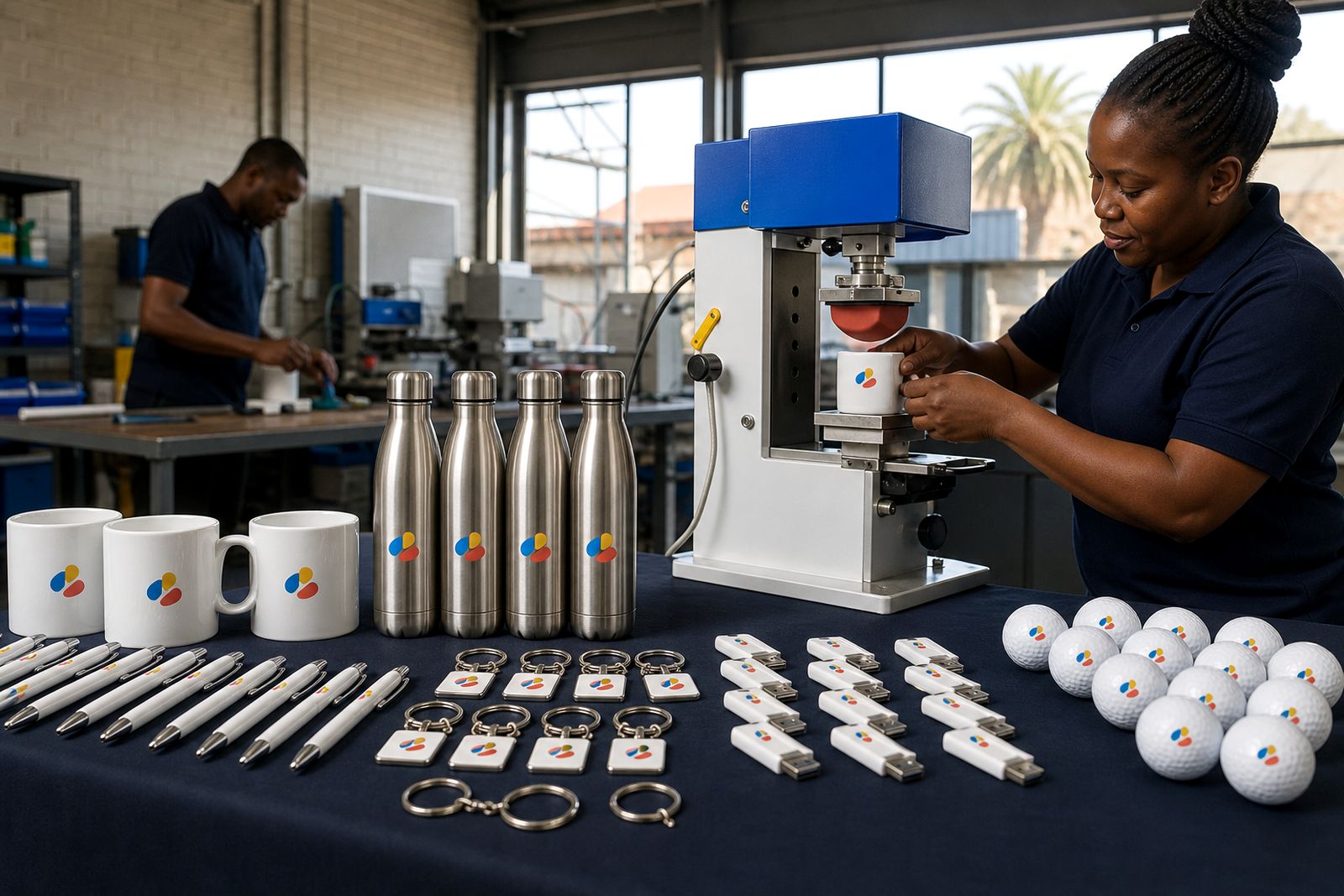
For pens, keyrings, USB drives, bottle lids, golf balls and many compact corporate gifts, pad printing is usually the practical choice. It handles one colour logos very neatly and also works for multi-colour branding when the artwork is separated properly and each colour is registered in sequence.
This method is especially useful when the branding area is not perfectly flat. A pen barrel, a rounded mug section, or the small top face of a tech gift often needs a controlled transfer rather than a flat pass. That is where pad printing earns its place. The printed mark can be small, clean and consistent when the item has been set up correctly.
- Best for logos placed on narrow or curved surfaces.
- Works well on plastics, coated metals, ceramics and painted finishes.
- Good for repeat branding across batches of promotional stock.
- Useful when the artwork is made up of solid spot colours.
Pad printing is less suited to very large artwork across a broad face, and it is not meant for large-format banner work. If a logo needs to wrap too wide around an item, or if the artwork includes gradients and photo detail, another method may suit the job better. That said, for the everyday mix of promotional items handled in South Africa, pad printing covers a lot of ground.
When screen printing still has the edge
Screen printing remains a strong option when the item gives you a flatter area and the artwork is fairly bold. It can produce solid colour coverage on products such as certain folders, boxes, flat drinkware sections and packaging components where the shape allows a proper screen setup. For simple logos with one or two colours, it can be a very tidy answer.
The limitation comes in when the item has complex curves or small awkward faces. A rounded promotional product with clips, shoulders or mould lines can make screen placement less forgiving. The artwork also needs enough room to breathe. Fine details and very small copy may not read as well if the chosen print area is tight.
Where clients sometimes confuse the choice is by assuming screen printing is simply the standard option for all branded merchandise. It is not. It is one option among several, and on many small corporate gifts pad printing gives more reliable placement. The item itself decides a lot, even before colour count is discussed.
UV printing for detail, gradients and flat faces
UV printing is attractive when the artwork includes multiple colours, tonal blends or photographic elements that would be cumbersome to separate for a traditional process. On a flat tech gift, presentation item or rigid panel, UV printing can hold crisp detail and small text very well. It is often chosen where the visual effect matters as much as the logo itself.
That does not mean UV suits everything. Many promotional products have curves, ribs or changing levels that interrupt the print path. Some coatings also need checking, particularly where adhesion may vary. A glossy sample can look excellent on one material and less dependable on another, so the substrate and finish should always be assessed first.
- Useful for full colour artwork and complex logos.
- Best on flat or nearly flat print zones.
- Can show fine lines, gradients and compact text clearly.
- Needs attention to coating, adhesion and item geometry.
For event merchandise and office giveaways, UV printing tends to be chosen more often on rigid items with a straightforward print face. If the product has a pronounced curve, pad printing normally stays the safer route.
A practical checklist for choosing the method
When comparing print methods, work through the physical facts in order. That avoids approving artwork that looks right on screen but does not suit the item in hand. We usually review the product shape, material, finish and print zone before moving to colour separation or proofing.
- Check whether the branding area is flat, curved, recessed or tapered.
- Look at the material and outer coating, including varnish or painted surfaces.
- Measure the usable print area, not the whole product face.
- Note whether the logo is single colour, spot colour or full colour.
- Check if very small text, registration or fine lines are essential.
- Confirm whether a proof or sample is needed before the print run.
For many Gauteng orders, especially those routed through Kempton Park near OR Tambo and then couriered onward, that early checking stage helps prevent delays tied to unsuitable stock or artwork changes. A small adjustment to scale or position can make the branding read far better on the finished item. Sometimes the item looks generous in size but the actual printable panel is tiny, which catches people out.
How we guide the decision on a real order
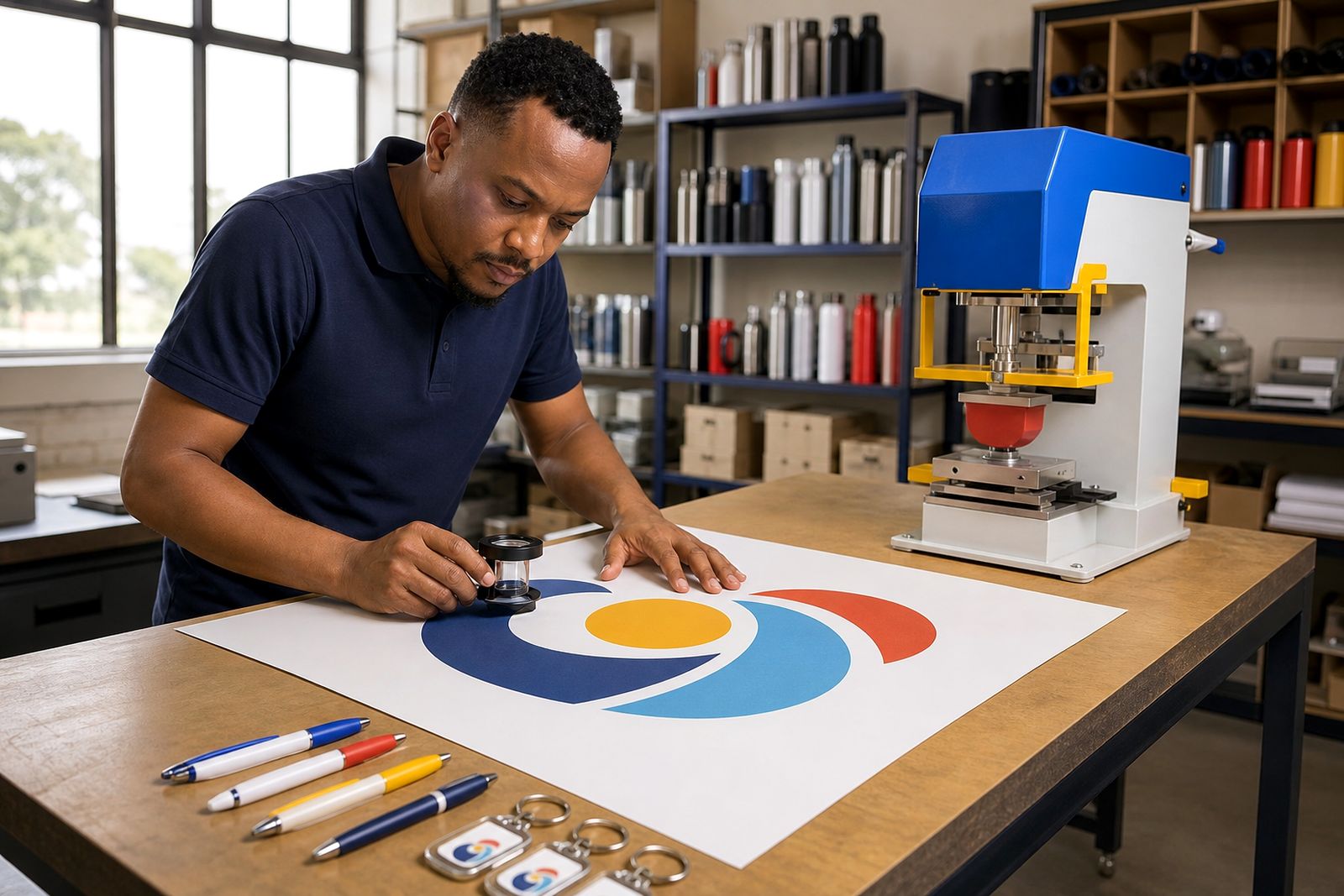
On a live promotional order, we start with your item list and logo files. We check the artwork, identify the likely print method for each product, and flag any concerns around size, line weight or colour separation. If the item and artwork are suitable, a plate is prepared for pad printed work, then a proof or sample is arranged before production and packing.
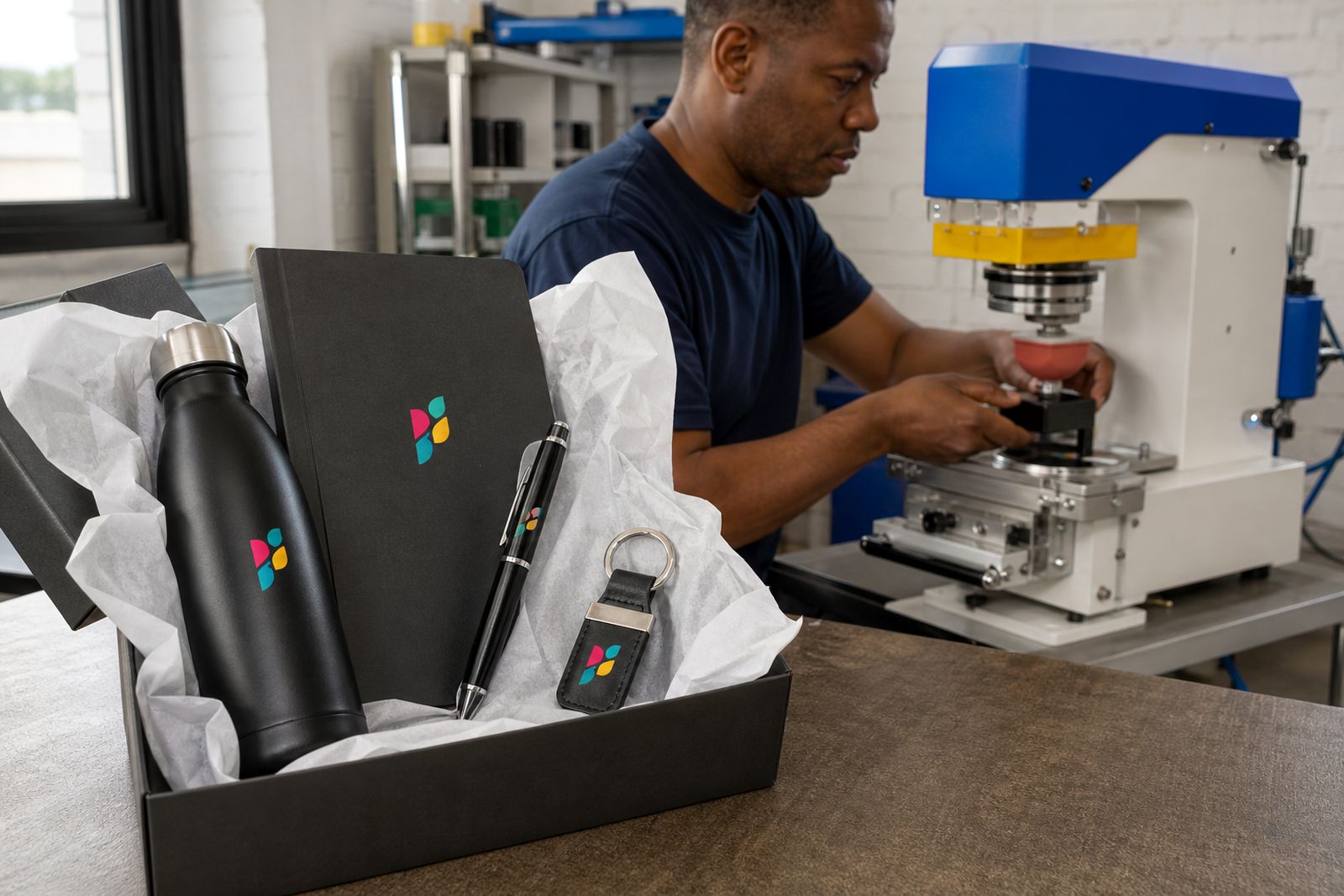
If screen or UV printing is the better fit for a particular product, that decision is made on practical grounds rather than habit. A bottle, pen and USB drive in the same campaign may not all suit the same process, and forcing one method across every line can lower the final standard. Mixed product campaigns often need mixed thinking.
If you are unsure which route suits your stock, send the item details and logo through our contact form. We can assess whether pad printing is the right choice or whether another method would give a cleaner result, better detail or a more stable print on that specific product.
What our Pad Printing customers say
Verified Google reviews
Questions we get asked
Is pad printing better than screen printing for pens?
Usually yes. Pens often have curved barrels, clips and limited print areas, so pad printing tends to place logos more neatly on the usable section.
Can UV printing replace pad printing on all promotional items?
No. UV printing is very good on flat faces with detailed artwork, but many promotional products are curved or uneven and are better suited to pad printing.
What should I send to compare print options for my items?
Send the product type, the approximate print position, the logo file and any colour requirements through our contact form. That gives enough detail to assess the most suitable method.
Also worth a look
Tell us about the job
Send sizes, materials and where you are through our contact form, and we will come back with the practical options.
Open the contact form